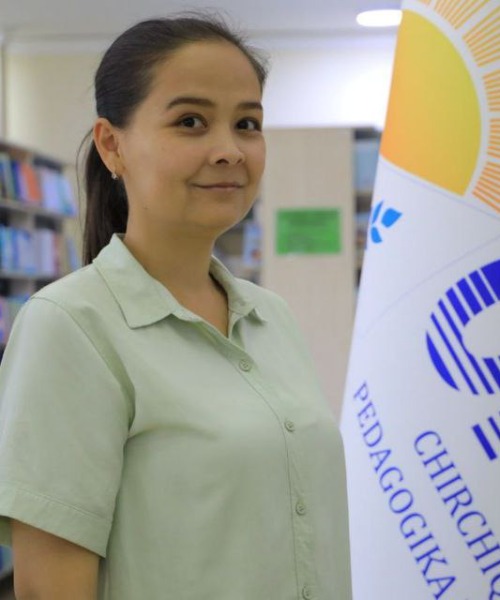
Zilola Rozikova
Teacher



Zilola Rozikova was born on October 27, 1995, in the Syrdarya region. From 2014 to 2018, she studied Foreign Language and Literature at Gulistan State University and obtained a Bachelor’s degree.
From 2022 to 2024, she pursued her Master’s degree at Chirchik State Pedagogical University. During this period, she conducted academic research on methods of teaching foreign languages to preschool-aged children, the development of communicative competence, and instructional practices based on innovative approaches.
Research Focus
Zilola Rozikova’s research focuses on the development of linguocreativity in foreign language teaching, with particular emphasis on fostering communicative competence in teaching English. Her scholarly interests include supporting students’ language creativity, activating speech activity through language games, role-play, creative writing, and multimodal tasks. In addition, her research addresses the integration of modern pedagogical technologies into foreign language education, learner-centered approaches, motivation enhancement, and the development of intrinsic motivation for language learning among non-philology students.
Research Works and Supervision
During her academic career, Zilola Rozikova has authored the following works:
one teaching manual titled Foreign Language;
one monograph titled Word Order in English and German: A Comparative Analysis;
one author’s certificate on the topic Developing Linguocreativity through Language Games in Teaching English (DGU).
In addition, she has published more than 10 research articles in international and national academic journals. Under her supervision, more than 70 research articles have been published by undergraduate students.
TEACHING ACTIVITIES
I teach English language and English language-related courses at Chirchiq State Pedagogical University. My teaching activities focus on developing students’ communicative competence, practical language skills, critical thinking, creativity, and independent learning abilities.
Courses taught include:
• English
• Reading and Writing
• Integrated Speech Skills
Teaching approaches and methodologies:
• Communicative Language Teaching (CLT)
• Task-Based Language Teaching (TBLT)
• Student-centred learning
• Interactive and collaborative learning
• Project- and problem-based learning
• Creative and communicative language activities
• Digital and technology-enhanced learning
Particular attention is given to the integration of listening, speaking, reading, and writing skills. Classroom activities include discussions, presentations, role-plays, problem-solving tasks, case studies, creative writing, vocabulary activities, peer work, group projects, and authentic communication tasks.
In Reading and Writing courses, students develop reading strategies such as skimming and scanning, analyse texts, expand academic and contextual vocabulary, and practise different types of writing, including formal and informal letters, emails, essays, and other functional texts.
My teaching also incorporates creative language activities aimed at developing students’ linguistic creativity and their ability to use English flexibly and effectively in different communicative contexts.
I encourage students to take an active role in the learning process through independent preparation, classroom interaction, reflection, peer feedback, and practical communication tasks. Digital resources and multimedia materials are used to support both classroom learning and independent study.
SCIENTIFIC ACTIVITY
My academic research has focused on comparative linguistic analysis of English and German, the use of digital technologies in teaching English to preschool children, as well as linguistic creativity and the development of communicative competence in English language teaching.
Bachelor’s Thesis
“A Comparative Analysis of Word Order in German and English”
The study examined the specific features of word order in German and English, the arrangement of words within sentence structures, and the similarities and differences between the two languages from a comparative linguistic perspective.
Master’s Thesis
“The Use of Mobile Applications in Teaching English to Preschool Children”
The study explored the use of mobile applications in teaching English to preschool children, their educational potential, and their role in increasing children’s interest and engagement in learning English.
Current Research Area
My current research focuses on linguistic creativity in English language teaching, the development of communicative competence, and the use of creative language activities in EFL contexts.
Research Topics Suggested for Students
I encourage students to conduct research in the following areas:
- The Use of Linguistically Creative Tasks in English Language Teaching.
- Developing Students’ Communicative Competence in English Classes.
- The Use of Creative Writing Techniques in English Language Teaching.
- The Use of Mobile Applications in English Language Teaching.
- Enhancing English Language Learning through Digital Technologies.
- Teaching English through the Flipped Classroom Methodology.
- The Use of Interactive Methods in English Language Teaching.
- Project-Based Learning in English Language Teaching.
- Developing Learner Autonomy in English Language Learning.
- Developing Critical Thinking in English Language Classes.
- The Use of Authentic Materials in English Language Teaching.
The Use of Digital Resources in Teaching English to Preschool Children.