Scientific Research
Chirchiq State Pedagogical University
Strategic scientific groups and directions have been established at the university to develop scientific research activities of strategic importance.
20+
Scientific Groups
150+
Topics
8
Faculties
12+
Grants
Science-oriented research group
This group primarily conducts research on obtaining functional polymer materials with new properties based on local raw materials, and studying their physicochemical properties and applications.
Pedagogy-oriented research group
Scientific research is being carried out on modern innovative pedagogical technologies and digital didactics methods in the field of education.
Faculty Research Directions
Faculty of Exact Sciences
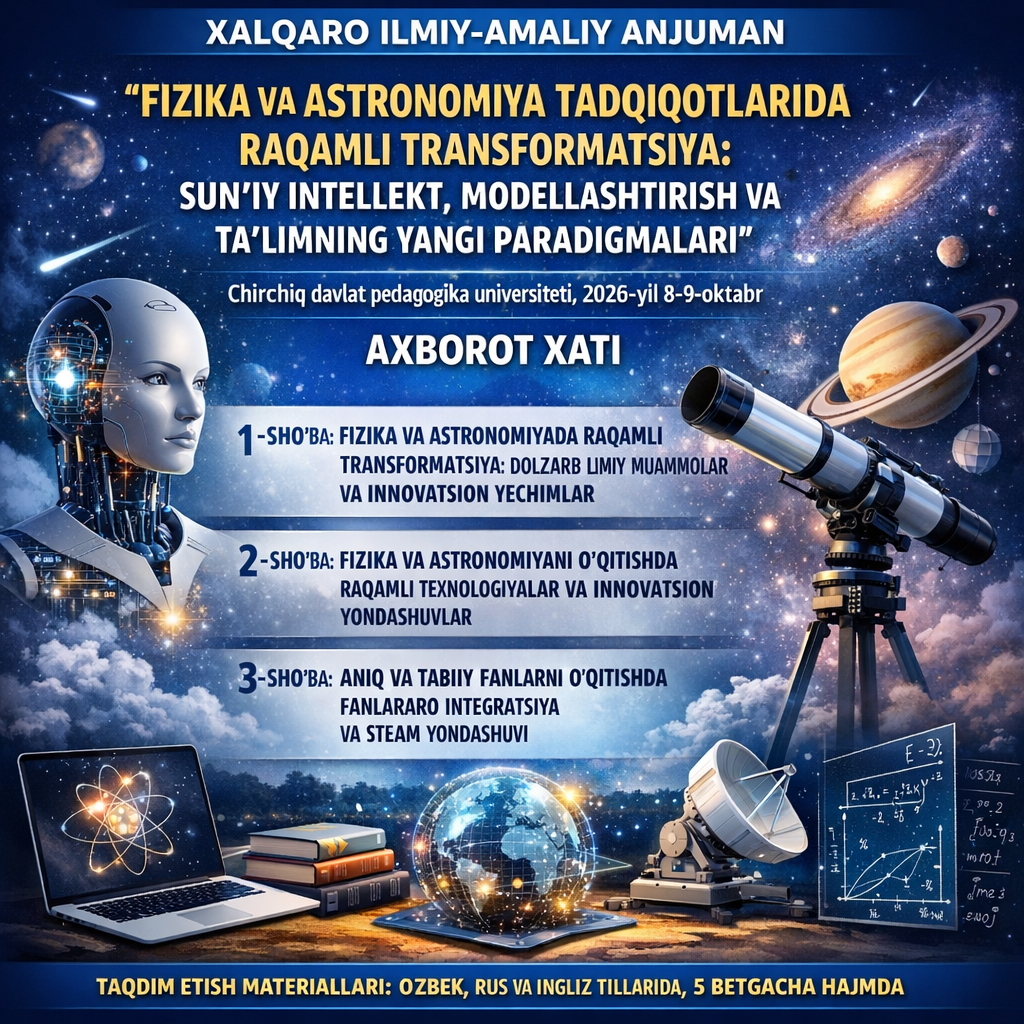
Physics • Mathematics • Astronomy
• Boundary value problems for differential equations in metric graphs and branched domains.
• Tensostimulated phenomena in compensated silicon and surface diode structures.
• Research on galactic and extra-galactic objects.
• Investigation of dynamic systems on Cayley trees.
• Spectroscopy of intermolecular interactions and kinetics of relaxation processes in condensed media.
Faculty of Natural Sciences
Chemistry • Biology • Geography
• Physicochemical properties and application of interpolimer complexes obtained from local raw materials.
• Synthesis of acetylene alcohols based on alkynes and ketones; properties of new ion exchangers based on PVC.
• Environmentally safe technologies for amine regeneration and gas purification using anion exchangers.
• Methods for extracting rare and precious metals from wastewater and technological solutions.
• Identification of phytoviruses common in Uzbekistan; cotton genetics and selection research.
• Properties of biologically active compounds derived from gossypol and analysis of organic solvents.
Faculty of History & Humanities
History • Archaeology • Philosophy
• Interethnic relations, religious tolerance, and philosophical views of Eastern thinkers.
• Study of historical monuments, holy sites, and shrines in the Tashkent region.
• Research on the socio-economic policy of the Soviet government and its consequences.
• Archaeological expeditions and their significance in lighting the history of Uzbekistan.
• Historical analysis of reforms implemented in Uzbekistan during the independence years.
Faculty of Philology
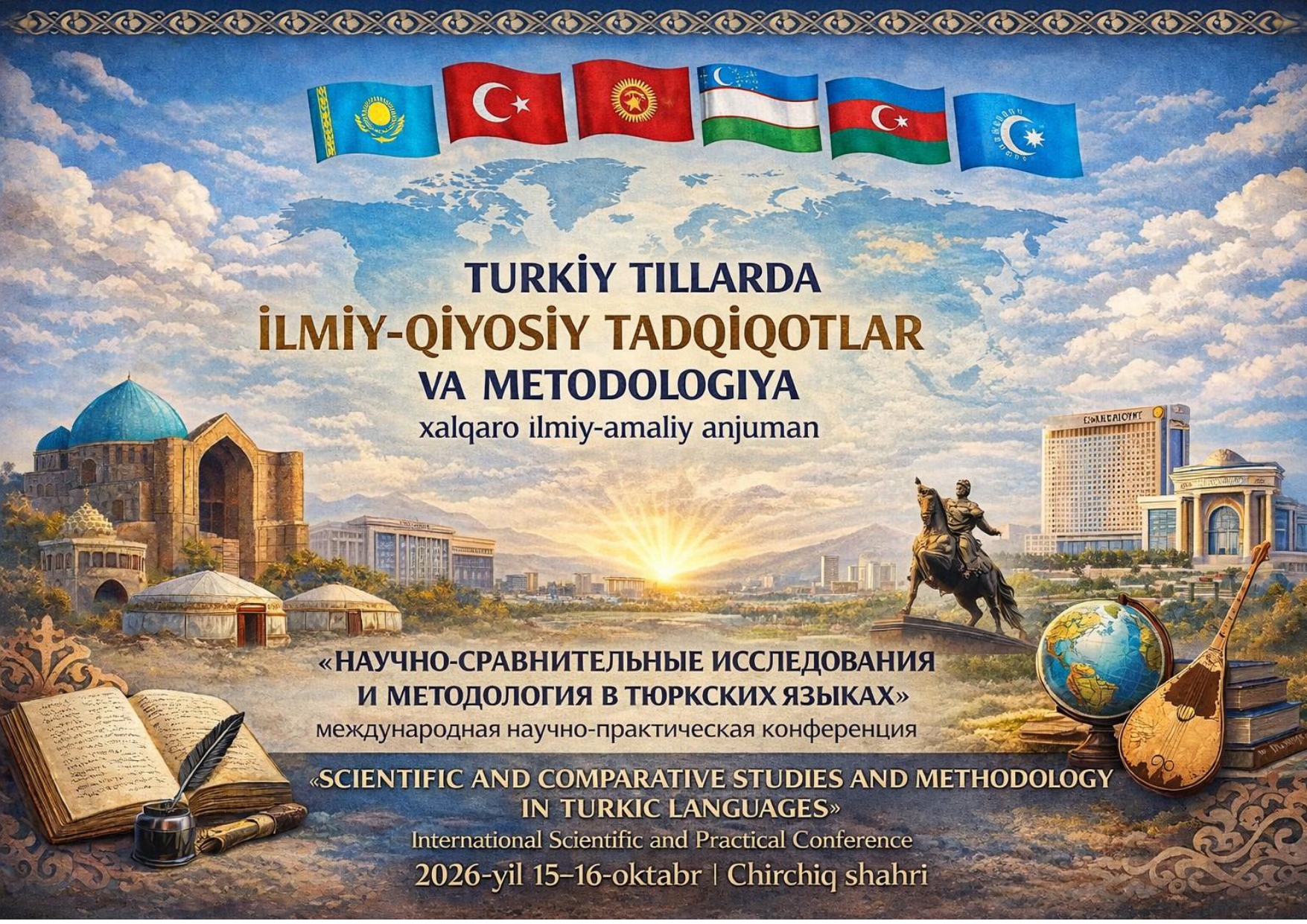
Uzbek • English • Russian • German
• Rapid foreign language teaching technologies based on a mnemonic database.
• Artistic psychologism in Uzbek novels and reflection of social problems in independence-era prose.
• Interpretation of 'faqr' in Alisher Navoiy's works and praise of the Motherland in Cho'lpon's works.
• Linguostylistic features of television advertising language and speech culture terms.
• Poetic syntax units and design technologies for foreign language lessons in higher education.
Faculty of Pedagogy & Psychology
Psychology • Creativity • Career Guidance
• Developing creativity in students and family values as a mechanism for early socialization.
• Socio-psychological factors in the formation of the modern teacher's image.
• Psychological foundations for career guidance of adolescents with musculoskeletal disorders.
• Methodology for forming scientific inquisitiveness in future teachers.
Faculty of Physical Culture
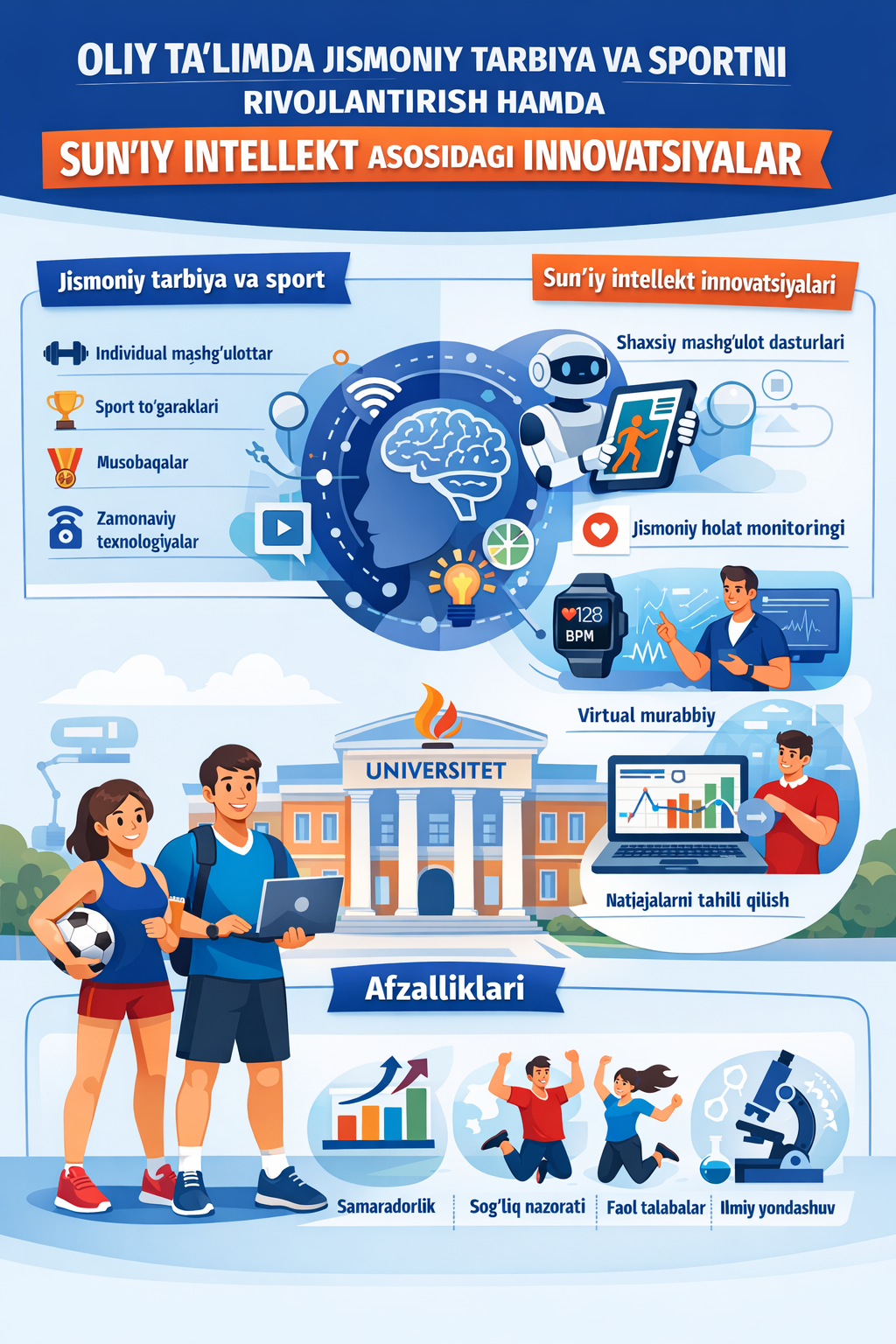
Sports • National Games • Health
• Increasing the popularity of sports among students and mechanisms of national sports.
• Foundations for training physical education teachers corresponding to modern requirements.
• Improving organizational-pedagogical foundations of belt wrestling training sessions.
• Forming healthy lifestyle skills in students through folk games.
Faculty of Tourism
Tourism • Regional Studies • Heritage
• Interpretation of the regional studies and tourism potential of the Tashkent region.
• Integrating historical heritage into the education of youth through tourist routes.
• Scientific and practical models for developing regional tourism infrastructure.
Arts & Primary Education
Arts • Preschool • Primary
• Shaping future teachers' artistic perception through fine arts.
• Foundations of analyzing and prognosticating (prognostics) education content in secondary schools.
• Developing modern educational methodologies using technology subjects as an example.