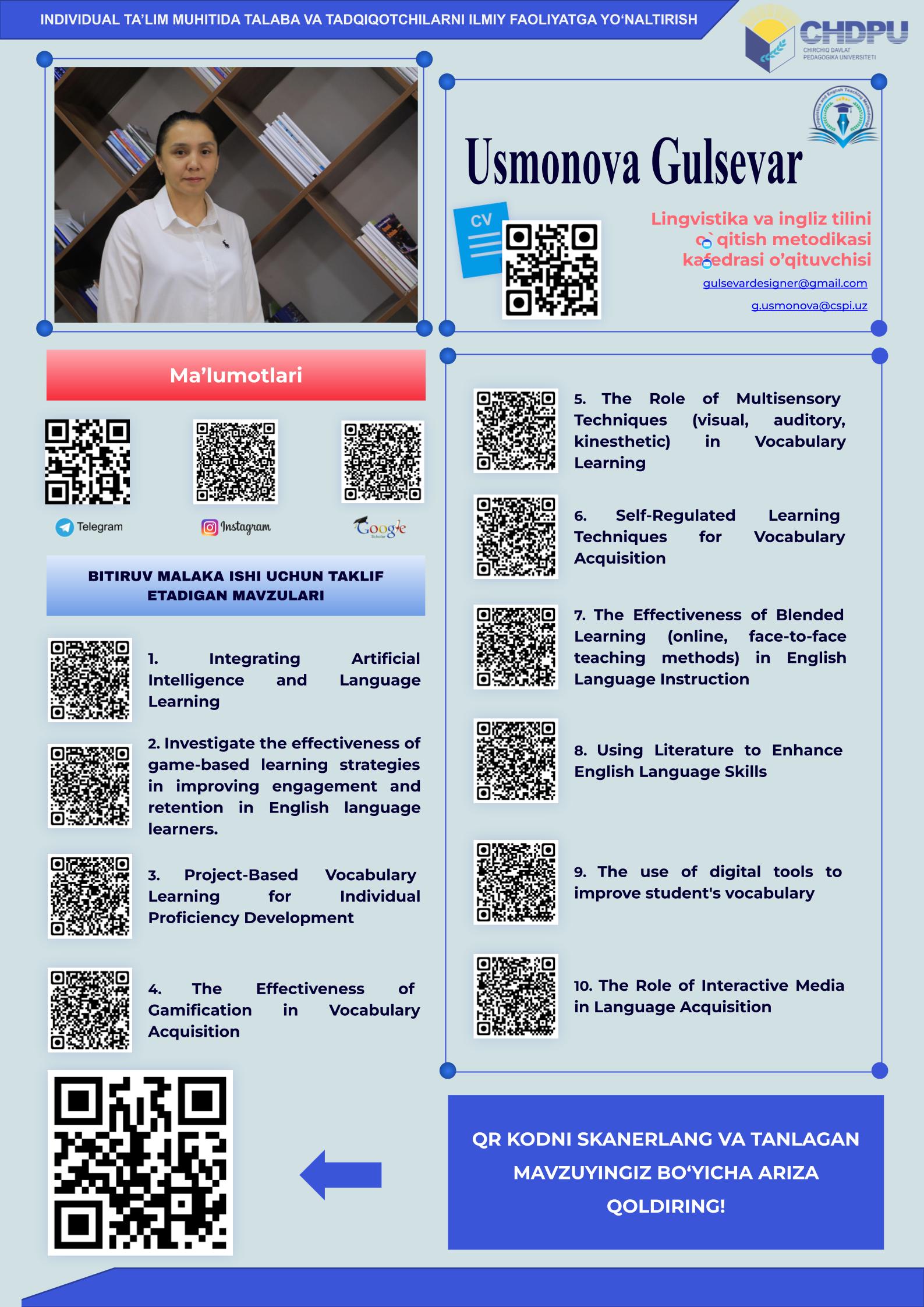
Usmonova Gulsevar Abdulaziz qizi
Kafedra o‘qituvchisi





Neologisms Scientific Platform
Theoretical Foundations of Socio-Cultural Neologisms
Introduction
Globalization has become of the most influential processes of the twenty-first century. It affects economics, politics, technology, culture, and language. Due to globalization, communication between countries and cultures has increased rapidly, which has also transformed the vocabulary of many languages. As a result, new lexical units called neologisms appear and spread through international communication channels.
Neologisms are newly created words, expressions, or existing words used with new meanings. They reflect changes in society, technology, and cultural interaction. Modern media and internet platforms play a major role in the formation and dissemination of neologisms.

Definition of Neologisms
In linguistics, neologisms are considered lexical innovations. These innovations appear when society creates new concepts, technologies, or social phenomena that require naming. For example, the development of social media introduced words such as “hashtag”, “blogger”, “streaming”, and “podcast”.
Some neologisms become permanent parts of language, while others disappear over time. Their survival depends on frequency of usage, cultural importance, and communicative efficiency.
Classification of Neologisms
Neologisms can be classified into several categories. Linguists usually divide them according to their origin, function, and structure.
- Technological neologisms
- Socio-cultural neologisms
- Internet and media neologisms
- Scientific and political neologisms
- Borrowed lexical units
Technological neologisms emerge due to innovations in science and digital communication. Socio-cultural neologisms are connected with changes in lifestyle, social identity, and cultural behavior.
Role of Media and Internet
Media and internet platforms are the fastest channels for spreading new vocabulary. Television, journalism, YouTube, TikTok, Instagram, and Twitter influence millions of users daily. As a result, new expressions quickly become part of everyday communication.
Modern internet communication prefers short, expressive, and emotionally powerful language. Therefore, many internet neologisms are concise, creative, and globally understandable.

Examples of Socio-Cultural Neologisms
Contemporary society uses numerous neologisms in daily interaction. Examples include:
- Influencer
- Viral content
- Digital creator
- Live streaming
- Fake news
- Chatbot
- Emoji culture
These lexical units demonstrate how globalization and digital communication shape modern language systems. They also show the close connection between culture, technology, and discourse.
Discursive Functions
Neologisms perform various communicative functions in discourse. First, they help speakers describe modern realities. Second, they create emotional and stylistic effects. Third, they strengthen communicative efficiency by using short and recognizable expressions.
In media discourse, neologisms attract attention and create modern stylistic impressions. In internet discourse, they simplify communication and increase interaction among users.
Conclusion
In conclusion, socio-cultural neologisms represent an important part of modern linguistic development. Globalization, media communication, and digital technologies continuously create new lexical forms. The study of neologisms helps linguists understand the relationship between language, society, culture, and communication.
As technology continues to evolve, new neologisms will constantly emerge, reflecting the dynamic nature of modern discourse.